Being Becomes Yohaku

Private Gallery

The password is incorrect.

Philosophy Works Profile

Philosophy

Western philosophy spent two thousand years assuming that things possess an inherent essence — the fixed quality that makes a mountain a mountain, a chair a chair. It was only in the late nineteenth century, through Nietzsche and later Derrida, that this premise began to collapse: essence is not discovered in the world but constructed by language, imposed upon a reality that, prior to articulation, carries no such fixed meaning.

Mahayana Buddhism had reached this conclusion more than two thousand years earlier. And Zen — which resists verbal explanation by design — encoded it not in doctrine, but in perception. The famous koan runs: mountains are mountains; mountains are not mountains; mountains are mountains again. Three stages. The first is the world as language gives it to us. The second is the dissolution of that articulation — prior to language, distinctions vanish. The third is subtler than either: a mode of perception in which articulation remains, but fixed essence does not. A mountain is still a mountain — but only because, in this moment, it stands in living relation to the sky, the clouds, the cliff at your feet, the horizon beyond. It is not a closed object. It is an open event.

This third stage inverts the grammar of existence itself. We say: a flower exists — flower as subject, existence as predicate. But if no thing carries a fixed essence, then what truly and continuously exists is Existence itself, and individual things are only its momentary crystallizations. The grammar turns: it is not that the flower exists. Being becomes a flower. The Japanese title of the central work in this body of painting — 存在が余白する — enacts this directly. Its closest English rendering: Being Becomes Yohaku.

Yohaku — the empty space at the heart of Japanese painting — has been described for centuries in terms that gesture toward something they cannot quite name: depth, mystery, the felt presence of the invisible. What this work makes possible is something more precise. Yohaku is the visual domain in which no specific existence has yet crystallized — where all possibilities remain latent, before any particular thing steps into the light. It is not emptiness as absence or negation. It is the primordial state of Being itself: the source from which all things emerge, and to which they return. This is why Yohaku has resonated across centuries with those who could not say why.

The paintings, the philosophical essay, and the individual commentaries written for each work form a single convergent argument — pursued first in language, then continued in paint. Together, they are designed so that what language can approach but not reach, the work itself completes.

Zen, by definition, embraces Furyumonji (the non-reliance on words) and fundamentally rejects linguistic comprehension. In the full essay — approximately 5,500 words — this philosophy of silence is logically articulated by interweaving Western conceptual frameworks with the doctrines of Mahayana Buddhist schools inseparable from Zen itself.

While we plan to make the full text available to the public in the future, at this stage, it is shared exclusively with those who resonate with our mission (please refer to the Profile & Mission page). The complete essay is available upon request for our partners and supporters.

Violaine Richard — Portfolio

Project I

The philosophical framework underlying these works is developed in full in our essay, shared exclusively with those who resonate with our mission.

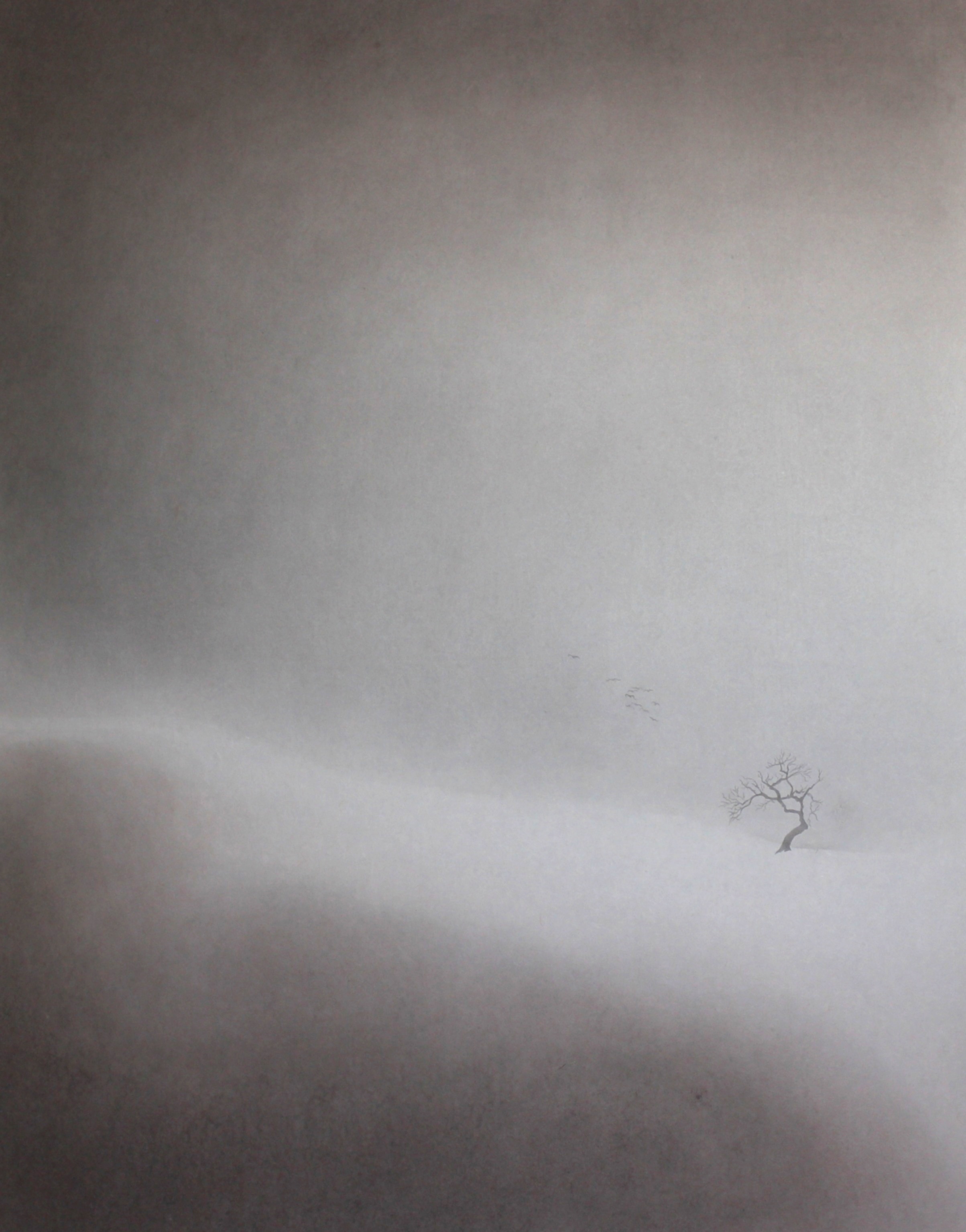
Being Becomes Yohaku — the presence within absence

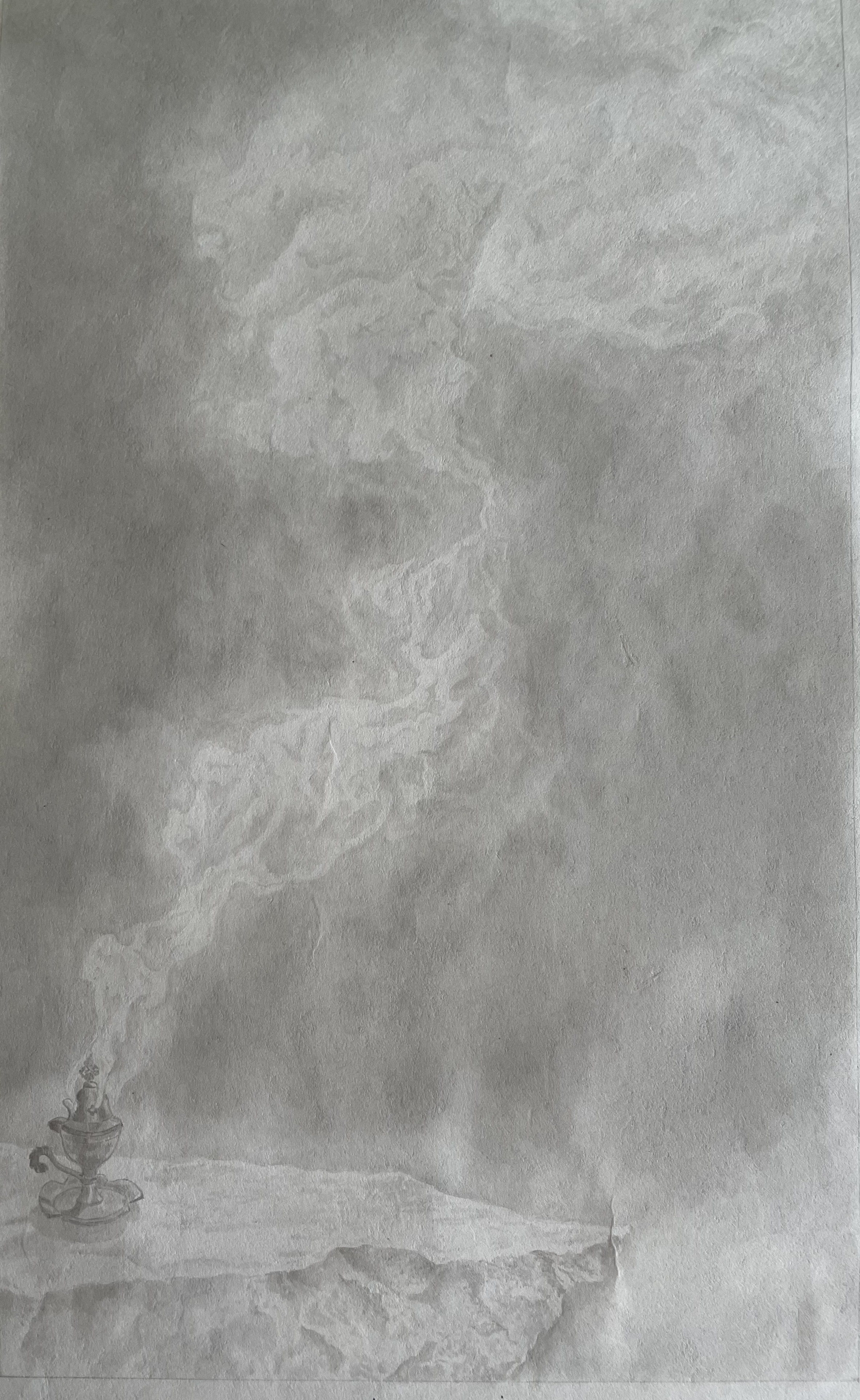
As discussed in the full essay, it is not that "a flower exists," but rather that "Being becomes a flower." In this work, Violaine Richard utilizes Yohaku (empty space) to depict "Existence/Being" in its vast, primordial state—a pure energy that has not yet crystallized or materialized into any specific form. By elevating Yohaku, a space traditionally defined by what is not painted, to the status of the central protagonist, this work provides a definitive conceptual form to the most vital element in the history of Nihonga.

Being Becomes Yohaku — the presence within absence

1167mm × 910mm

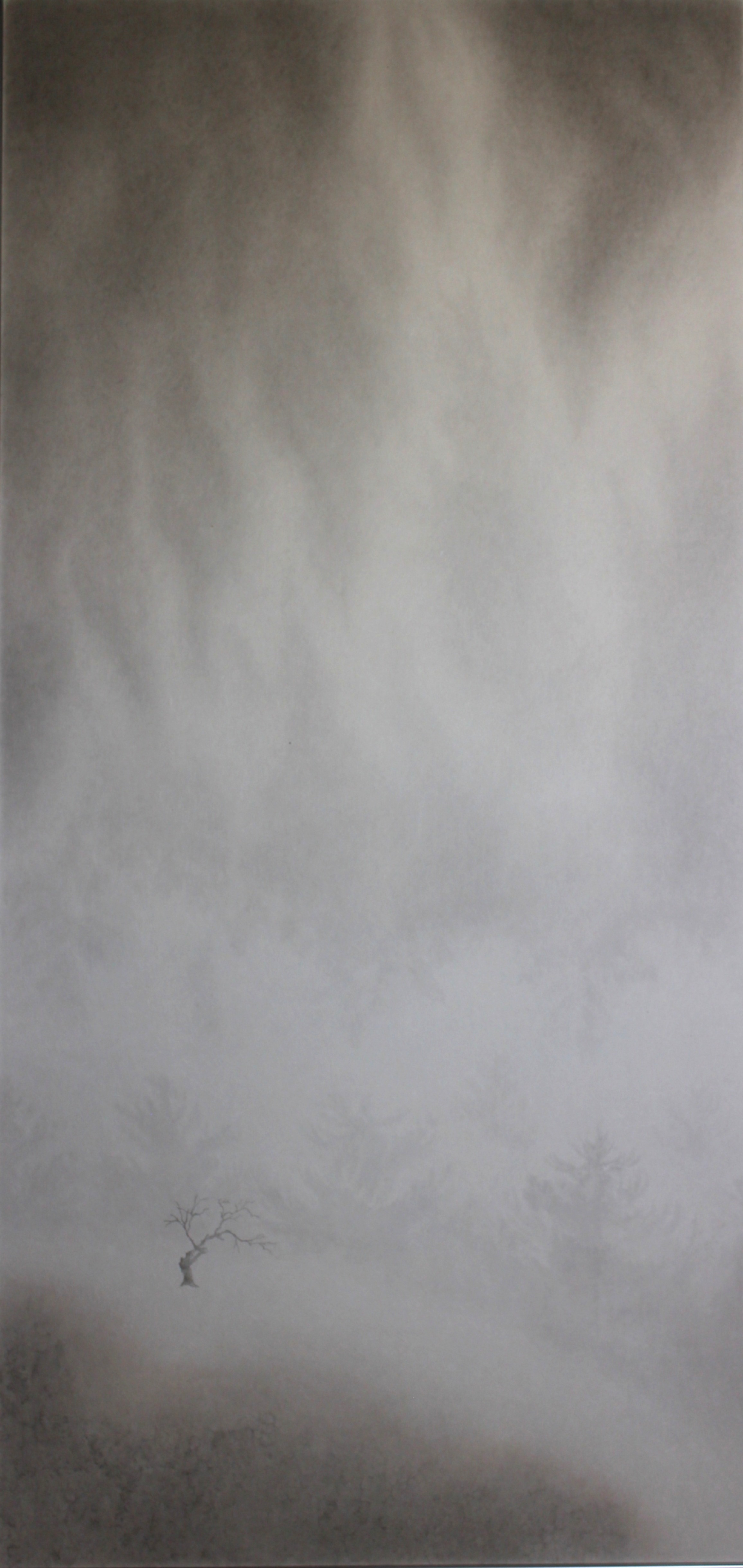
Seeds of Yohaku

This work reflects a profound thought experiment. As seen in "Being Becomes Yohaku," the artist visualizes "Existence/Being" in the Zen sense by depicting Yohaku. While "Existence/Being" possesses the character of a "Beginning"—not yet crystallized into concrete objects—one must ask: what was the world like before even that Existence/Being emerged? Having already sublimated Yohaku into the status of "Existence/Being," the artist here explores the state of the world prior to the moment Yohaku itself crystallizes into a recognizable form. This painting is a visual manifestation of that pre-ontological inquiry.

Seeds of Yohaku

1460mm × 710mm

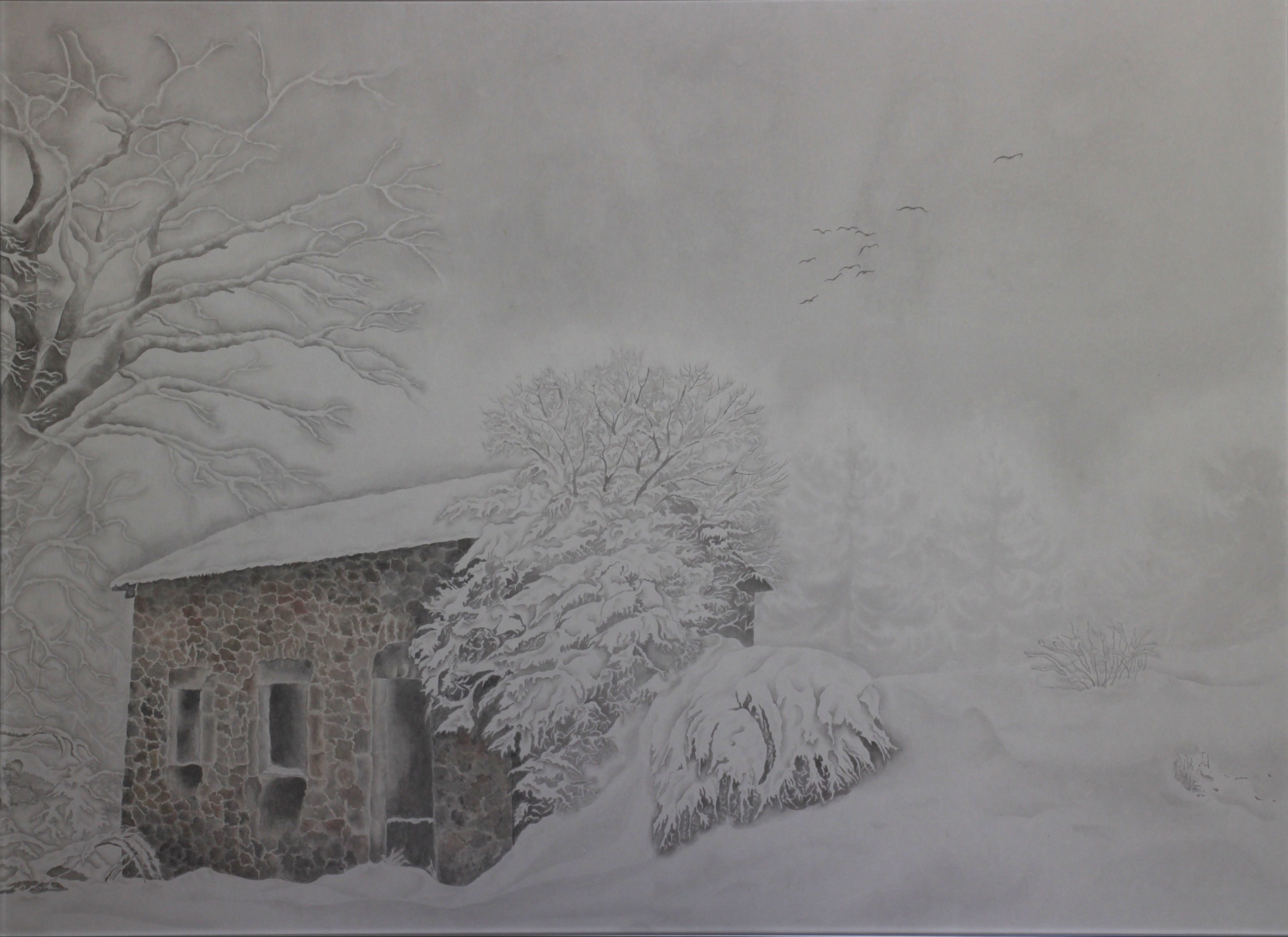
Being Becomes Silence

If "Existence/Being" can crystallize as physical matter, is it also possible for it to exist as "Sound"? Specifically, as the soundless state of "Silence"? This is the central theme of this work. While the canvas is filled with numerous elements—objects we normally identify through the signifiers of "a hut," "trees," and "snow"—each element is depicted as if it carries the signified of "Silence." Through the depiction of an ordinary landscape, the work aims to manifest "Silence" itself as the true essence of all things present.

Being Becomes Silence

1000mm × 727mm

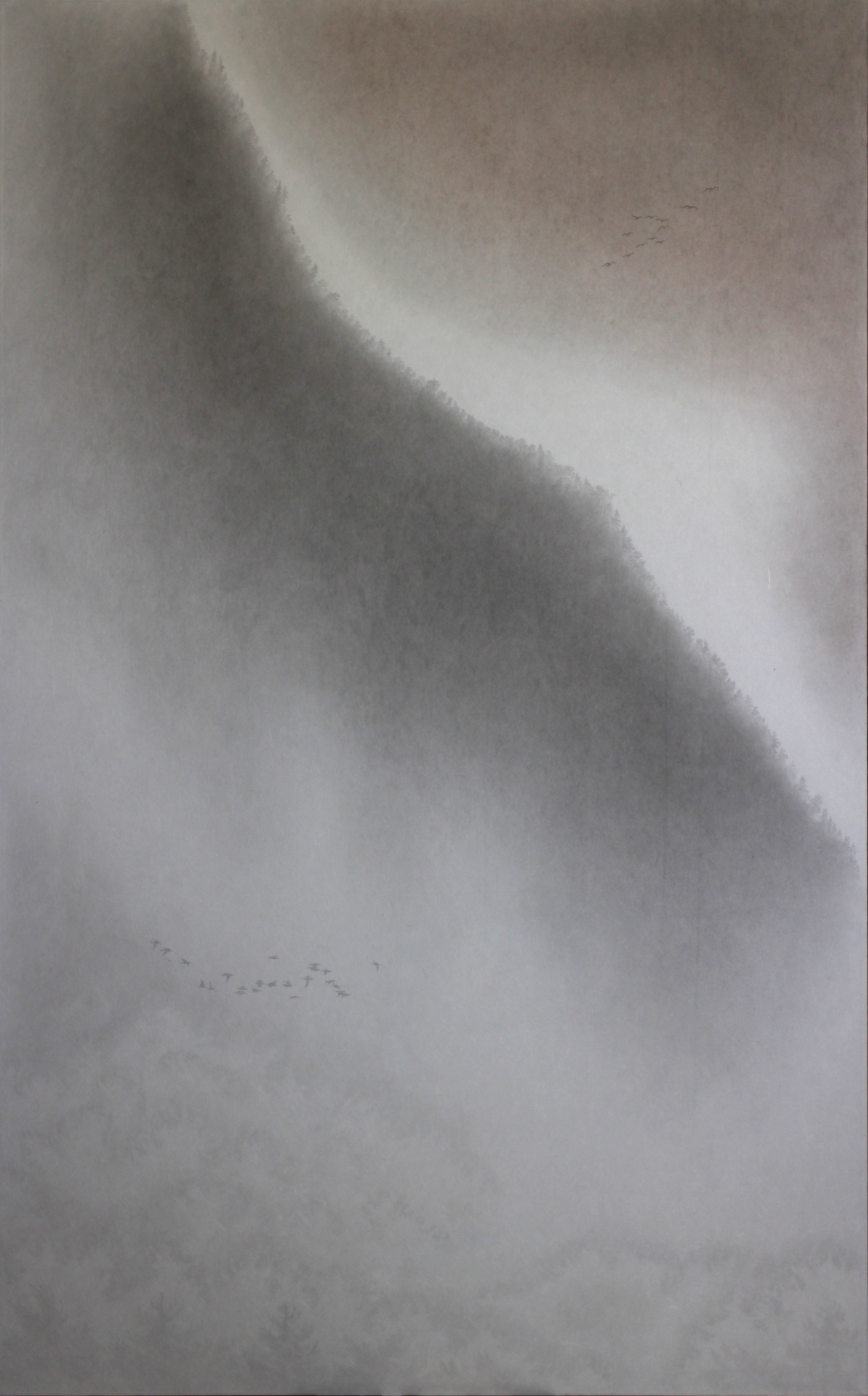
The World Behind It

To what extent can the limits of Yohaku be pushed? Is it possible to make the unpainted areas the protagonist while simultaneously evoking the imagination of a world existing within them? This work seeks to extract the full potential of Yohaku, crystallizing "Existence/Being" neither as an object nor as a sound, but as "the world behind, which no one has yet seen." It challenges the viewer to perceive the depth and reality that reside within the void.

The World Behind It

1167mm × 727mm

Being Becomes Gone

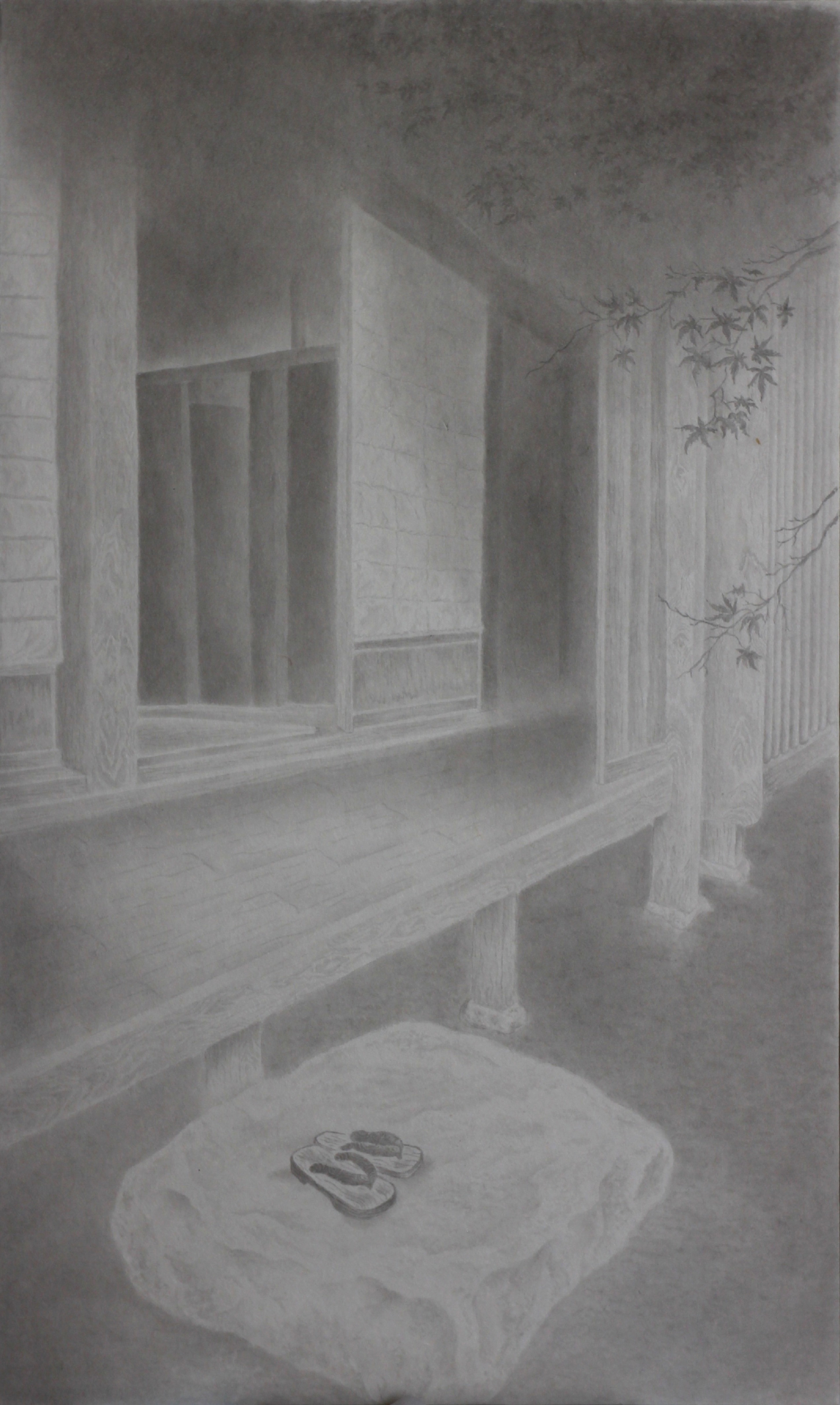
In the work "Being Becomes Yohaku — The Presence Within Absence," I depicted the Zen concept of "Being" through the medium of yohaku (blank space/void). Because yohaku has not yet crystallized into a specific form or been materialized, it easily evokes a sense of unknown potential—the feeling that it could become anything. Consequently, it also serves as an effective vessel for conveying the concept of "One in All, All in One," as I discussed in our essay. By contrast, once "Being" has been materialized into a specific object—for example, a flower—it becomes difficult to illustrate that same "One in All, All in One" essence. In "Being Becomes Gone," I have depicted a Japanese engawa (veranda) across the entire washi paper. In other words, there is no yohaku here. While depicting individual elements such as pillars, trees, and maple leaves, the work was completed with the aim of having all these things manifest as the "deceased"—a presence that is not explicitly drawn anywhere.

Being Becomes Gone

455mm × 273mm

Profile & Mission

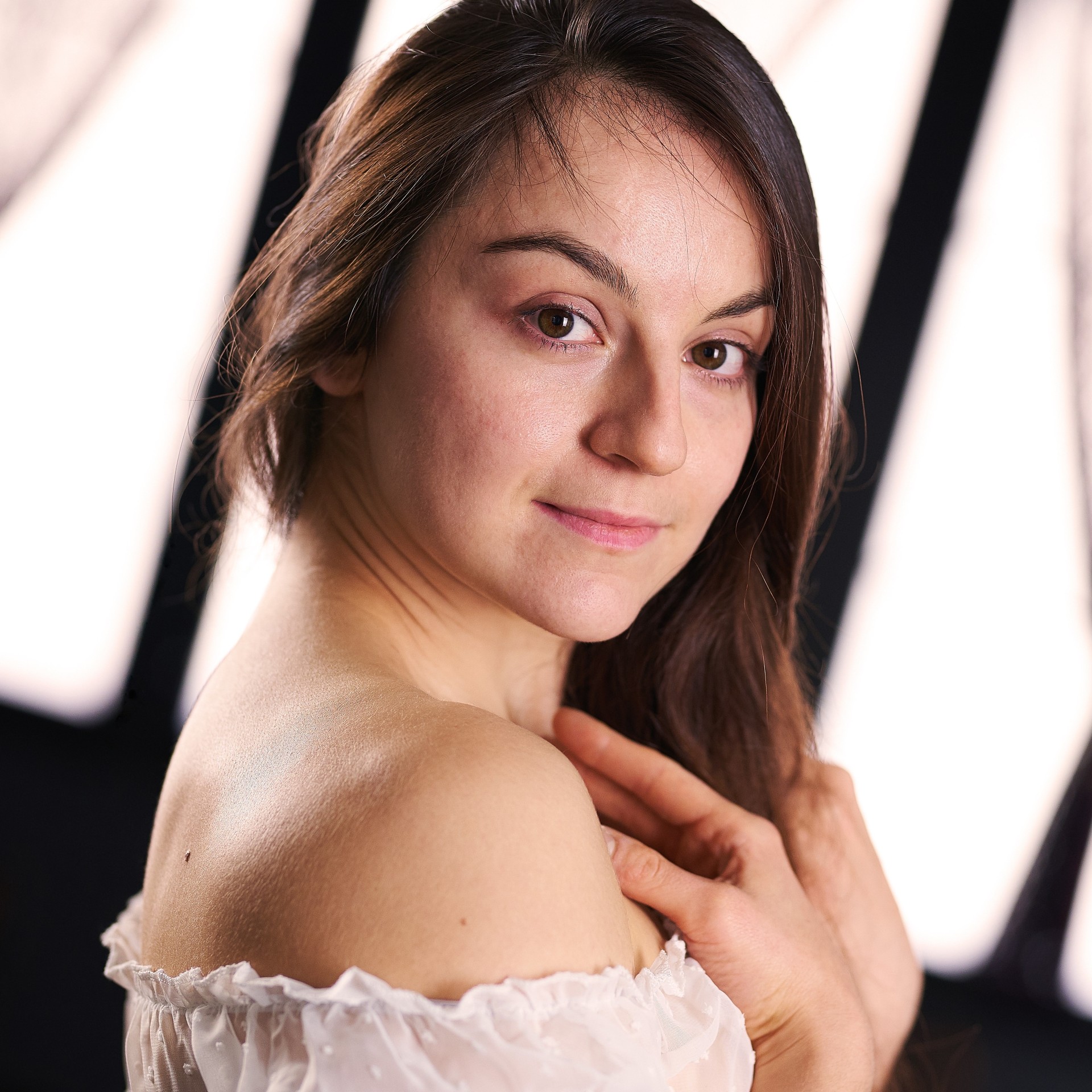
Violaine Richard

Violaine Richard

A Japanese-style painter whose practice is rooted in the Zen concept of Kū—often translated as "emptiness," not in the sense of void but as the dissolution of fixed perception. Through her work, she seeks to let viewers experience the external world as it appears to one who has reached this state, while pursuing the philosophical possibilities of Yohaku—the "empty margin" that is central to Japanese painting yet has seldom been explored with true conceptual depth.

Violaine studies under a master from the Nihon Bijutsuin, a prestigious institution established in 1898 by Tenshin Okakura, the pioneer who modernized Japanese art. This connection places me in the direct, orthodox line of the Japanese painting tradition.

Language: French & English

Yoshitaka Kashiwagi

Yoshi provides the conceptual foundation for the art of Violaine Richard. By weaving together Zen ontology and linguistic theory, he unearths forgotten lineages of Eastern thought to bring them into dialogue with Western philosophy. Through this philosophical lens, Violaine manifests the "Structure of Existence" hidden within the void of the washi paper.

Language: Japanese & English

Mission: Reconstructing Japanese Aesthetics

Beyond Superficial Reception

Today, Japanese aesthetics are garnering global attention, evolving into a universal language that transcends borders. From landscape design in public spaces to the application of karesansui (dry landscape) and Zen concepts in modern minimalism, Japanese aesthetic sensibilities have deeply permeated the realms of contemporary design and art.

However, we cannot help but feel a profound sense of apprehension regarding this phenomenon. These aesthetics are rooted in multi-layered, deeply philosophical concepts such as mujo-kan (the impermanence of all things), yugen (profound, mysterious grace), wabi-sabi (beauty in imperfection and transience), and yohaku (the aesthetic of emptiness). Yet, in the current "Japan boom," it is difficult to claim that the depths of these concepts are being truly understood.

Just as 19th-century Japonisme served merely as an "expansion of expressive techniques" for the Impressionists, the contemporary fascination with Japan remains trapped as a consumption of icons — symbols of a "refined lifestyle" within a global context. The limitations of this trend are becoming increasingly evident, even in fields where rigorous intellectual inquiry — such as art, philosophy, and literature — should be paramount.

Presenting Vision Through Art and Logic

We intend to challenge this structure of "Japan as a consumed product." As artists dedicated to the practice of Nihonga, we refuse to merely inherit traditional designs. Our mission is to excavate the philosophical depths that underlie Japanese aesthetics, articulate that depth through logic, and present this inquiry through Nihonga works where logic and form are inextricably linked.

Through the dual pillars of theory and praxis, we aim to clearly visualize concepts of Japanese aesthetics that are often left ambiguously defined. We seek to elevate Japanese traditional beauty from a mere "fascination" or "style" into a universal intellectual asset of the modern era, engaging in a truly equal, philosophical dialogue with the world. This is the horizon toward which we, as two practitioners of this art, strive.